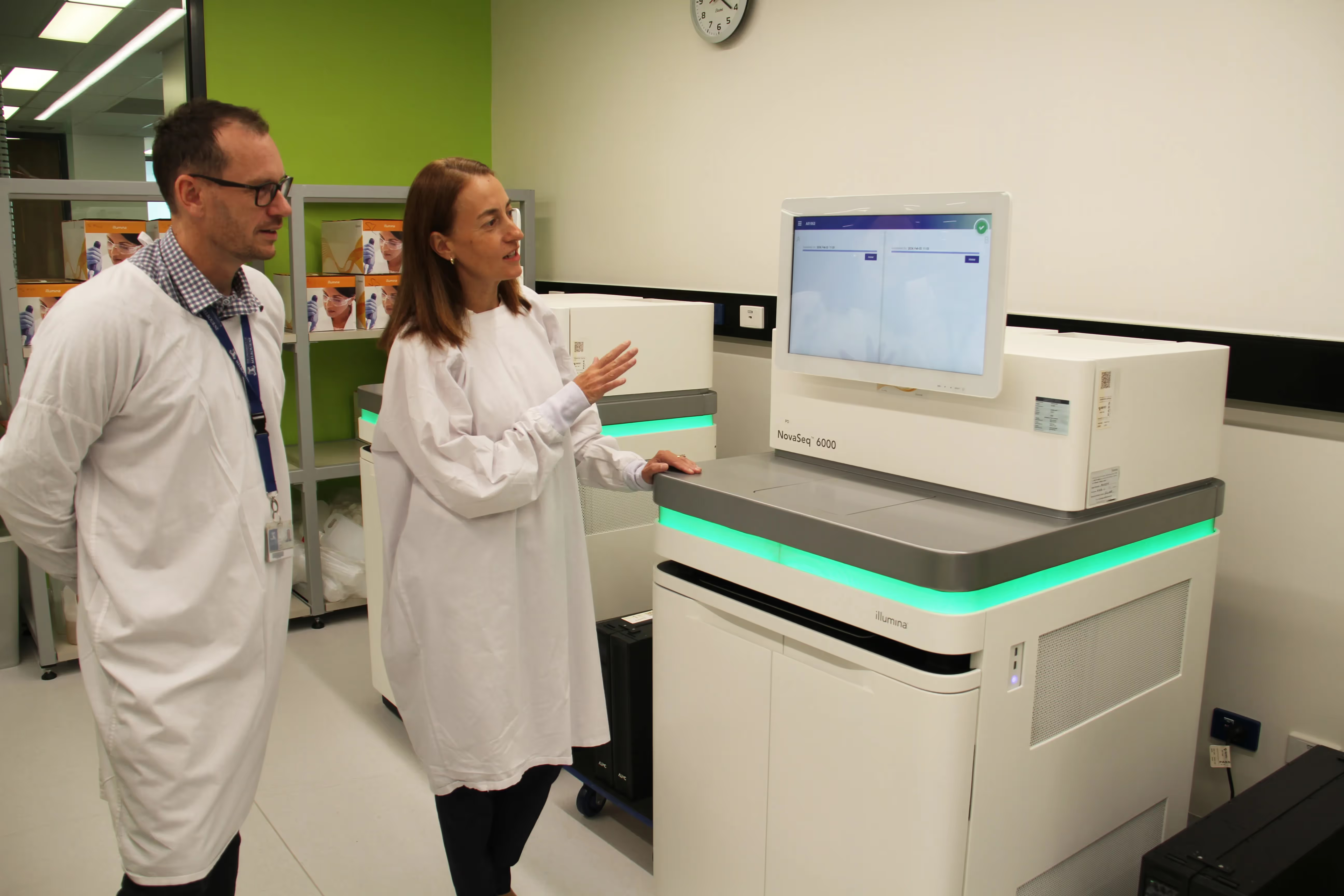
Associate Professor Richard Tothill and Professor Sarah-Jane Dawson teamed up with researchers at the Peter MacCallum Cancer Centre to develop a rapid blood test that used genome sequencing to identify where an unknown cancer originated in the body.
Lead: Associate Professor Richard Tothill, University of Melbourne Centre for Cancer Research and Department of Clinical Pathology
Key partner: Professor Sarah-Jane Dawson, Medical Oncologist and Clinician Researcher, Peter MacCallum Cancer Centre and University of Melbourne Centre for Cancer Research
Cancer of unknown primary (CUP) is a metastatic cancer where clinical investigations fail to identify the tissue of origin (TOO).
There are more than 2,500 new CUP cases reported each year in Australia, making it the 14th most common cancer diagnosis. It is also the sixth most common cause of cancer-related death, with only 13 per cent of patients surviving five years or more.
The team has evaluated two new DNA technologies and has now begun development of a blood-based test (liquid biopsy), which uses both mutation and DNA methylation features to accurately predict cancer TOO.
The minimally invasive liquid biopsy test is capable of identifying tiny bits of tumor DNA floating through the bloodstream that have been released from the patient’s cancer. The test will allow doctors to detect where the cancer originated from and spot mutations or markers which may suggest what type of treatment is likely to work.
“Through genomic testing and liquid biopsy, we’re able to get a clearer picture of a patient’s cancer – even if it has already begun to spread. This allows us to identify the best possible treatments for that patient, sparing them the anguish of prolonged diagnostics uncertainty.”
Associate Professor Richard Tothill
Collaboration was a vital part of the project – particularly with Harwing Medical Foundation through the use of their CUP whole genome sequencing dataset.
Research from the project featured in two scientific publications and presented at three international conferences.
The work created eight new genomics-related job roles and involved four student interns, contributing to the development of Victoria’s future genomics workforce.
This project built upon the research from the collaborative SUPER and SUPER-NEXT studies and utilised state-of-the-art genomic approaches to resolve the cancer tissues of origin and identify potential targeted treatment approaches – with many treated through clinical lead Professor Linda Mileshkin’s specialised CUP clinic at the Peter MacCallum Cancer Centre.